
AI restaurant software is purpose-built technology using voice recognition and natural language processing to automate guest calls, accept reservations, and sync with POS systems. The market reached $9.68 billion in 2024 with projections hitting $49 billion within five years, driven by labor shortages and the need for 24/7 guest service.
Operators from bistros to multi-unit groups are racing to adopt AI restaurant software in 2026. Whether you run a neighborhood cafe or manage a growing hospitality group, you have probably noticed the buzz around voice AI, automated reservations, and smart phone systems. This guide explains what AI restaurant software actually is, why demand is surging, and how to deploy it without losing the human touch that makes your restaurant special.
AI restaurant software is purpose-built technology that uses voice recognition, natural language processing, and predictive analytics to automate guest calls, accept reservations, and sync real-time data with POS and booking systems.
The market opportunity is massive. The restaurant AI market reached $9.68 billion in 2024 with projections soaring to $49 billion within the next five years. This explosion reflects a fundamental shift in how operators approach front-of-house technology.
What is driving this growth? Several factors are converging:
Unlike generic chatbots, restaurant-specific AI platforms understand the nuances of hospitality. They handle complex reservation modifications, remember guest preferences, and manage waitlists dynamically. This specialization is what separates true restaurant AI from off-the-shelf tools that were never designed for the pace and pressure of service.
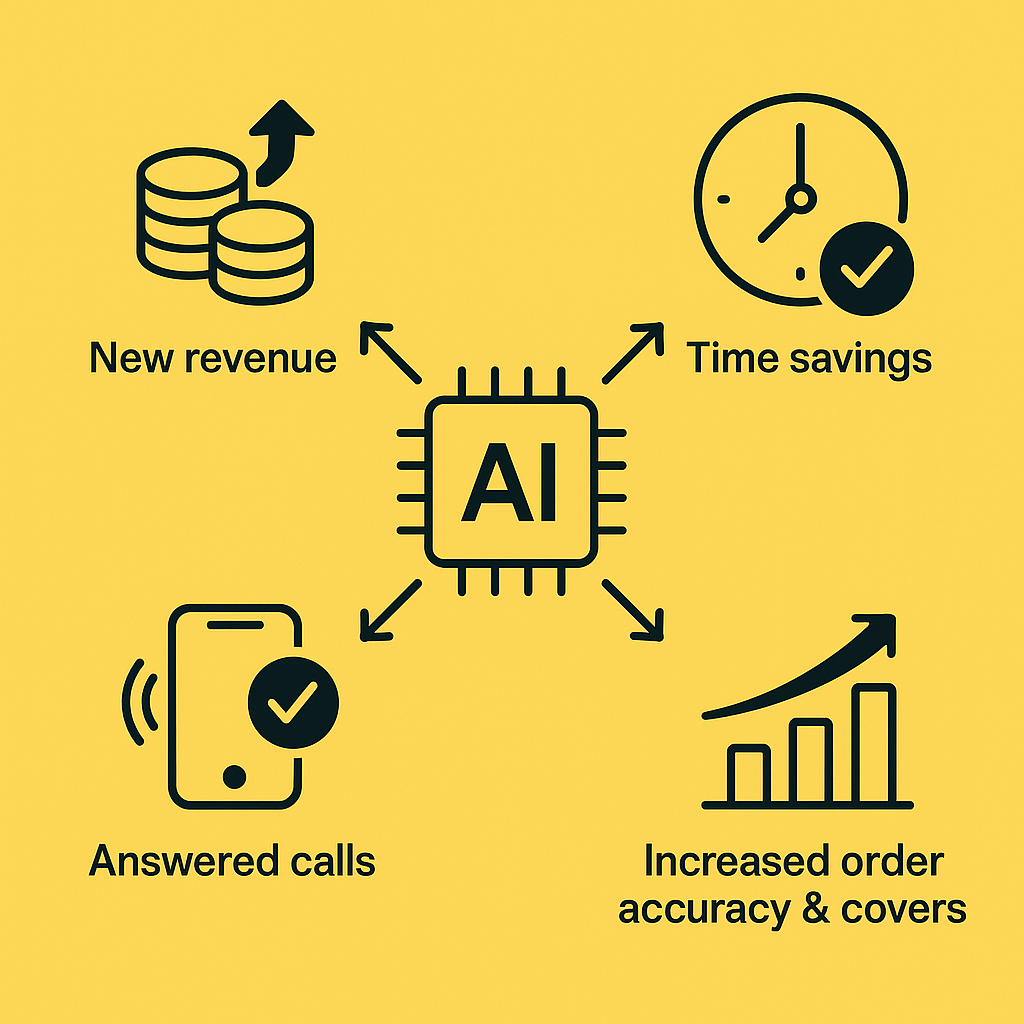
The numbers tell a compelling story for operators weighing an AI investment.
"In our existing implementations, AI hosts are generating an additional revenue of $3,000 to $18,000 per month per location, up to 25 times the cost of the AI host itself," says David Yang, founder of Newo.ai, as reported by Forbes.
Here is what real-world deployments are delivering:
| Metric | Impact |
|---|---|
| Staff phone time | Reduced by 87% |
| Order accuracy | Improved to 99.5% |
| After-hours reservations | +15% new revenue stream |
| Phone covers | Up to 141% increase |
| Booking time | 22 seconds average |
The guest experience improvements are equally significant. AI systems provide 24/7 reservation management without the need for additional staffing, ensuring no call goes unanswered during off-hours or peak rushes. This matters because over two-thirds of Americans would avoid restaurants that don't answer their phones.
Key takeaway: AI restaurant software typically pays for itself through increased reservation capture, labor cost savings, and upselling opportunities within the first few months of deployment.
The best AI restaurant software for front desk automation combines natural voice processing, multilingual support, and seamless POS integration. Understanding these core components helps you evaluate which platform fits your operation.
Voice AI represents the most visible layer of restaurant AI technology. If you have called a restaurant in New York City, Miami, Atlanta, or San Francisco recently, chances are you've spoken to an AI host rather than a human staff member.
These systems do more than answer calls. At Taco Bell, conversational AI achieves more than 90% successful order containment, meaning only a fraction of calls need human intervention. Voice AI cuts drive-thru ordering time by 25% while handling 90% of orders automatically.
The technology works through speech-to-text APIs, natural language processing, and text-to-speech engines that process orders in real time. Modern systems recognize accents, handle background noise, and maintain sub-second latency to keep conversations feeling natural.
Integration capability separates restaurant-first AI from generic bots. Here is why plug-and-play beats cobbled-together solutions:
Hostie AI, designed specifically for restaurants by restaurant operators, offers seamless integration capabilities with major reservation systems and POS platforms. The platform's AI assistant, Jasmine, speaks 20 languages fluently with restaurant-specific training.
For operators wanting a deeper dive into connecting these systems, check out our integration playbook for OpenTable and Toast POS.
Not all AI is created equal. The difference between restaurant-specific platforms and generic tools can mean the difference between delighting guests and frustrating them.
Slang AI claims to drive up to 50% more phone covers and emphasizes rapid call processing. The platform reports delivering at least 10x ROI and can save restaurants up to 200+ hours monthly in staff time. However, generic chatbots lack the hospitality context that makes guest interactions feel personal.
The global market for restaurant management software was valued at USD 5.79 billion in 2024 and is expected to grow at a 17.4% compound annual rate through 2030. This growth is driven by platforms that understand hospitality workflows.
Growth in AI-driven categories has surged, with Answer Engine Optimization and five other AI categories reaching Grid Report eligibility for the first time. AI Agents and AI Chatbots now rank among the top 10 fastest-growing software categories.
Hostie AI provides the conversational depth and customization flexibility that fine-dining and guest-focused establishments require. For a detailed comparison of leading platforms, see our head-to-head analysis of Hostie AI vs Slang AI.

With AI expected to power 95% of customer interactions by 2025, restaurants can no longer afford to operate with disconnected systems. Here is a step-by-step checklist for smooth implementation:
An entry-level voice assistant can cut a 5 to 10-minute order interaction down to under two minutes on average. Setup typically takes 30 minutes with platforms designed for quick deployment.
For a detailed walkthrough, our 48-hour integration guide covers every step from API configuration to optimization.
Real-world results demonstrate what is possible when operators commit to restaurant-first AI.
| Restaurant | Platform | Results |
|---|---|---|
| Burma Food Group | Hostie AI | 141% increase in phone covers |
| The Slanted Door Group | Hostie AI | 56% boost in over-the-phone covers |
| Bodega SF | Hostie AI | Immediate operational improvements |
"The phones would ring constantly throughout service," says Matt Ho, owner of Bodega SF. "We'd get calls for basic questions that were already on our website. Hostie has made the job easier for the host and doesn't disturb guests while they're enjoying their meal."
Hostie has answered over 400,000 guest calls, with 81% resolved automatically and a 97% satisfaction rate. The platform scaled from 5 pilot restaurants in 2024 to over 200 locations across major markets.
For more success stories and buying considerations, explore our 2025 buyer's guide for AI restaurant software.
Despite the opportunity, many operators stumble during implementation. Understanding common pitfalls helps you sidestep them.
Integration challenges top the list. Operators in recent surveys pointed to integration challenges, data management concerns, and pockets of discontent around certain areas of their tech stack. More than one in three operators named a lack of staff to manage new technology as a top challenge.
Most feel underprepared. Eight in 10 restaurant executives say their AI investments will increase in the next fiscal year, but most respondents say their organizations lack readiness when it comes to strategy, operations, and technology infrastructure.
AI can take bookings when the restaurant is closed or during peak hours when human hosts are unavailable. This capability only helps, however, if staff knows how to review and manage AI-handled interactions.
How to avoid these pitfalls:
💡 Ready to see Hostie in action?
Don't miss another reservation or guest call.
👉 Book a demo with Hostie today
The best AI restaurant software does not replace your team. It frees them to do what they do best: create memorable experiences for every guest who walks through your door.
"Restaurants are rapidly becoming the last bastion of personal interaction in the retail space," says Lenny Lighter, former owner of Moishe's Restaurant in Montreal, as noted by Forbes.
Hostie AI was created by operators who know the pace, pressure, and passion of the industry. Every call answered, every opportunity captured, so there are no more lost reservations or missed connections.
The question is not whether AI will transform restaurant operations. It already is. The question is whether you will adopt tools built specifically for hospitality or settle for generic solutions that miss the nuances of what makes your restaurant special.
With platforms starting at $199 per month and setup taking under an hour, the barrier to entry has never been lower. The operators moving fastest are the ones who recognize that AI is not about removing the human element. It is about making sure your humans can focus on the moments that matter most.
AI restaurant software is technology designed specifically for the hospitality industry, utilizing voice recognition, natural language processing, and predictive analytics to automate tasks like guest calls, reservations, and data syncing with POS systems.
The growth is driven by increased AI adoption in hospitality, labor shortages, and the need for automation. The market is projected to grow from $9.68 billion in 2024 to $49 billion in the next five years.
AI software can significantly increase revenue by capturing more reservations and reducing labor costs. It also enhances guest experiences by providing 24/7 reservation management and improving order accuracy.
Key features include natural voice processing, multilingual support, seamless POS integration, and the ability to handle complex reservation modifications and guest preferences.
Operators should audit call volumes, configure webhooks, set language preferences, test during slow periods, and train staff on escalation protocols to ensure smooth AI integration.
RELATED