
The best AI restaurant software for front desk automation combines natural voice processing, multilingual support, and seamless POS integration. Leading platforms like Hostie AI show 141% increases in phone covers and reduce booking times to just 22 seconds. These systems handle reservations, answer questions, and manage waitlists 24/7 while cutting hold times by 91%, letting staff focus on in-person hospitality.
• Top platforms include Hostie AI (20+ languages, unlimited customization), Slang.ai (speed-focused), PolyAI (enterprise chains), Maple Voice (takeout), and OctoTable (global coverage)
• AI hosts generate $3,000-$18,000 monthly revenue per location—up to 25x their cost
• Direct integrations with OpenTable, Toast POS, and Yelp Waitlist enable deployment in days, not months
• 87% reduction in missed calls during peak hours frees staff for memorable guest moments
• Burma Food Group achieved 141% phone cover increase after implementing AI voice assistant
• Real-time conversation monitoring ensures quality control while maintaining the human touch
2025 is the breakout year for AI restaurant software, and operators who automate the host stand now will own the guest relationship while competitors stay on hold.
If you've ever watched a busy host scramble between a ringing phone and a line of guests waiting to be seated, you know the pain. The good news? New AI technologies are now revolutionizing customer-facing functions by managing bookings, engaging in natural conversations, handling multiple languages, and showcasing soft skills previously thought to be exclusive to humans.
This guide breaks down the best AI restaurant software platforms for front desk automation, what features actually matter, and how to get up and running in days rather than months.
Front desk AI refers to voice-enabled systems that answer calls, take reservations, respond to guest inquiries, and manage waitlists without pulling your team away from in-person hospitality.
So why now? Three forces are converging:
The bottom line: restaurants that still let calls ring during the dinner rush are leaving money on the table.

Not all AI phone systems are created equal. Here's what to evaluate before signing anything:
| Feature | Why It Matters |
|---|---|
| Voice AI quality | Systems should handle phone calls, take reservations, process takeout orders, and answer questions using natural language processing. |
| Multilingual support | AI voice assistants that speak 14+ languages serve diverse communities and tourist-heavy markets. |
| Reservation system integration | Native connections to OpenTable, Toast POS, and Yelp Waitlist prevent double-bookings and manual data entry. |
| Real-time visibility | Operators need dashboards that show live conversations, not just call logs after the fact. |
| Customization depth | Template-based bots struggle with complex requests; look for unlimited prompt flexibility. |
The restaurant industry is experiencing a technological revolution, with AI-powered phone systems transforming how establishments handle customer interactions. Choose a platform built for hospitality workflows, not generic call centers.
OpenTable now integrates with industry-leading voice AI solutions so venues can take reservations 24/7 while delivering a high-quality guest experience. The AI assistant for restaurants uses advanced artificial intelligence to ensure automated and professional booking management.
Here's how the top platforms stack up:
Hostie AI positions itself as "AI for restaurants, made by restaurants," emphasizing its restaurant-operator origins and deep understanding of hospitality workflows.
Key strengths:
Proven results: Burma Food Group saw a 141% increase in phone covers after implementing Hostie's virtual concierge. Real-world metrics from August 2025 show an average 22-second call-to-confirmed booking time.
"Thanks to Hostie, we can spend more time connecting with our guests. That personal attention has really come across in online reviews, with many guests mentioning how warm and attentive our team is. I believe it's because guests feel genuinely cared for, with someone right in front of them, fully present and engaged."
-- OpenTable Voice AI
Slang AI emphasizes revenue generation through rapid call processing. The platform claims to drive up to 50% more phone covers.
Key strengths:
Limitations: Slang provides a basic dashboard but lacks the depth and interactivity that full-service restaurants need for complex guest scenarios.
"The OpenTable and Slang AI integration was a game-changer. Guests weren't just calling to ask about availability anymore, they were actually booking. That's where the value really compounded."
-- Alexios Milioulis, DineAmic Hospitality Group (OpenTable)
PolyAI targets enterprise restaurant groups with high call volumes and multiple locations.
Key strengths:
Best for: Large chains seeking 60% reduction in seasonal hiring, saving over $1 million in documented cases.
Maple Voice is designed specifically for high-volume restaurants where phone orders drive revenue, with a primary goal of maximizing call conversion and labor ROI.
Key strengths:
Limitations: Maple's English-only support limits its applicability for restaurants in diverse markets where multilingual capabilities are essential.
OctoTable focuses on international restaurants needing round-the-clock coverage across time zones.
Key strengths:
Best for: Tourist-heavy venues and international restaurant groups needing truly global language coverage.
Let's talk dollars and sense. The data from over 500,000 restaurant calls paints a clear picture:
| Metric | AI Performance |
|---|---|
| Hold time reduction | 91% |
| Missed call reduction | 87% |
| Phone cover increase (Burma Food Group) | 141% |
| Call-to-booking time | 22 seconds |
"In our existing implementations, AI hosts are generating an additional revenue of $3,000 to $18,000 per month per location, up to 25 times the cost of the AI host itself."
-- David Yang, founder of Newo.ai (Forbes)
High-volume establishments receive between 800 and 1,000 calls per month, fielding everything from dress code questions to last-minute reservation changes. Every missed call during a dinner rush is a potential lost cover.
Key takeaway: AI hosts don't just save labor; they capture revenue that would otherwise walk out the door.
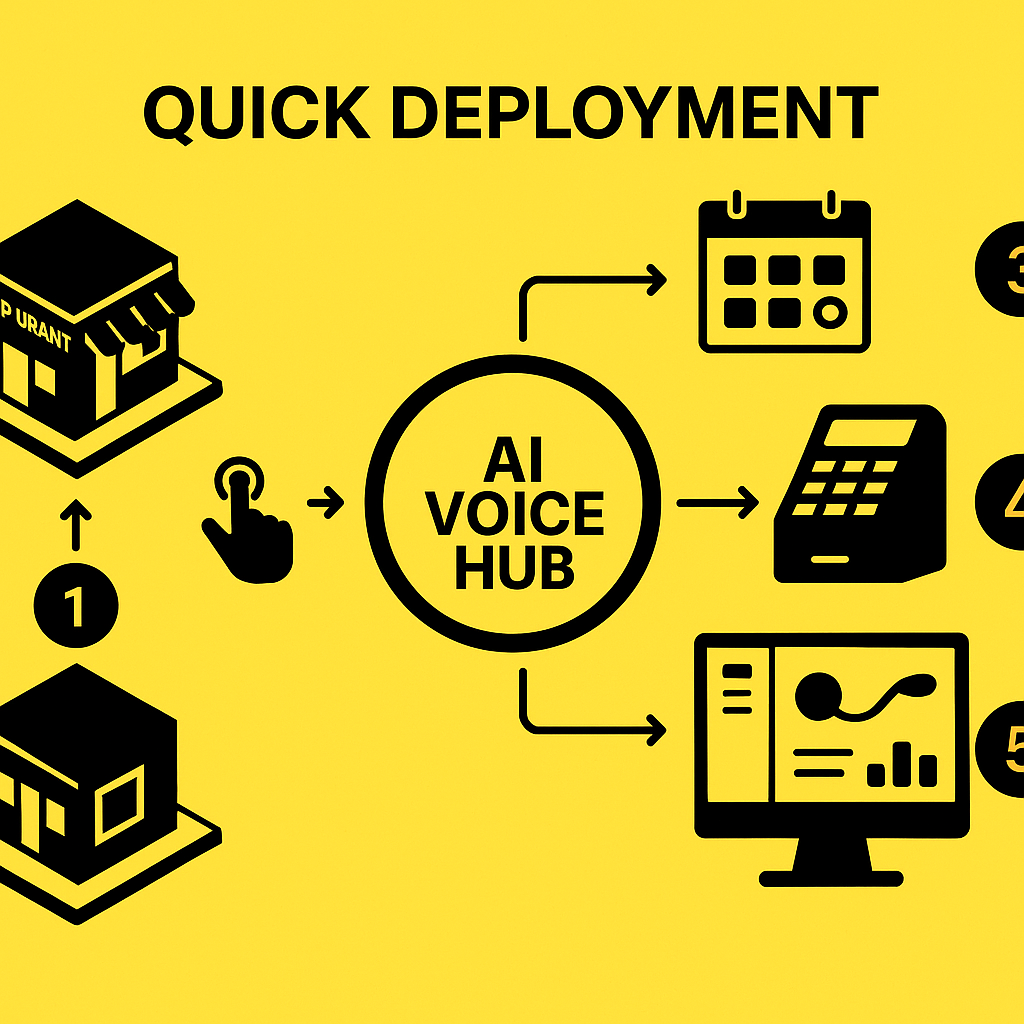
Getting started is simpler than you might think. Most platforms follow a hub-and-spoke model with the AI serving as the central communication hub.
Here's a practical deployment playbook:
Toast's AI philosophy captures the goal well: "Let AI help with the joyless, time-consuming tasks. Our tools help streamline operations, so humans can focus on the human stuff."
This partnership builds on OpenTable's history of AI innovation, including being the first restaurant tech partner to collaborate with ChatGPT on launching experiential plugins. For a detailed walkthrough, see our integration guide.
Not everyone is sold on AI just yet.
"I'm skeptical on the state of AI agents currently," says Sanjay Singhal of Coffee Oysters Champagne in Toronto. (Forbes)
That skepticism is healthy. Here's how to avoid common mistakes:
Pitfall 1: Choosing a generic bot
Solution: Pick platforms built specifically for hospitality. AI hosts offer 24/7 reservation management without additional staffing, but only if they understand restaurant workflows.
Pitfall 2: Losing the human touch
Solution: McKinsey research confirms that AI will not make most human skills obsolete, but it will change how they are used. Free your team to focus on in-person hospitality rather than phone juggling.
Pitfall 3: Ignoring staff concerns
Solution: Position AI as a teammate, not a replacement. Train your team on how to monitor AI conversations and when to step in.
"Restaurants are rapidly becoming the last bastion of personal interaction in the retail space."
-- Lenny Lighter, Prime Bar à Boeuf (Forbes)
The best implementations enhance hospitality rather than dilute it.
AI systems offer a distinct advantage with their multilingual capabilities, enabling smoother communication with diverse clientele and enhancing the overall customer experience. But technology is just the enabler.
The winning formula combines:
With Burma Food Group's 141% phone cover increase and 22-second booking times, the evidence is compelling.
For full-service and fine-dining restaurants that value conversational depth, 20-language coverage, and real-time visibility, Hostie AI offers the most comprehensive solution. The platform's restaurant-operator heritage means it understands what hospitality actually looks like on a busy Friday night.
Ready to stop missing calls and start owning the guest relationship?
💡 Ready to see Hostie in action?
AI restaurant software for front desk automation uses voice-enabled systems to handle calls, take reservations, respond to inquiries, and manage waitlists, freeing staff to focus on in-person hospitality.
2025 marks a tipping point due to cost pressures, relentless call volumes, and shifting guest expectations, making AI solutions crucial for efficiency and guest satisfaction.
Key features include high-quality voice AI, multilingual support, reservation system integration, real-time visibility, and customization depth to handle complex requests.
Hostie AI connects to OpenTable and Toast through API integration, allowing real-time table availability access and automated reservation creation, enhancing efficiency.
Common pitfalls include choosing generic bots, losing the human touch, and ignoring staff concerns. Solutions involve selecting hospitality-specific platforms and training staff to work alongside AI.
RELATED