
AI restaurant software uses machine learning and natural language processing to automate guest interactions and operational decisions, helping Canadian operators address labour shortages while improving service. Leading platforms handle 97% of peak-hour calls and can generate $3,000-$18,000 monthly revenue per location, with implementation typically taking 2-3 weeks.
• The restaurant AI market is valued at $9.68 billion in 2024, projected to reach $49 billion within five years
• AI systems achieve 97% peak-hour answer rates compared to 75-85% for human staff, while restaurants typically miss 20-40% of calls during busy periods
• Restaurants see an average 26% lift in covers after implementing AI reservation systems with POS integration
• ROI payback periods range from 2-3 weeks for high-volume restaurants, with annual returns exceeding 760%
• Modern AI platforms speak multiple languages and integrate directly with OpenTable, Toast POS, SevenRooms, and other existing restaurant systems
AI restaurant software is transforming how Canadian operators run their front and back of house, and the timing could not be better. With a chronic shortage of entry-level staff driven by low pay, high stress, and lingering pandemic effects, restaurants across Toronto, Montreal, and beyond are searching for ways to do more with less. At the same time, diners expect faster answers, seamless reservations, and personalized service around the clock.
This guide walks you through what AI restaurant software actually does, the use cases you can deploy today, the ROI you can realistically expect, and how to roll out a solution across multiple locations without disrupting your team. Whether you run a single bistro or a growing group, the goal is simple: help you decide if, when, and how AI fits into your hospitality strategy.
The restaurant AI market is booming. The worldwide AI market is expected to grow from US$235 billion in 2024 to over US$631 billion by 2028, and hospitality is one of the fastest adopting sectors. Eight in 10 restaurant executives surveyed say their AI investments will increase in the next fiscal year, citing enhanced customer experience and smoother operations as top priorities.
Canada's hospitality industry faces a unique labour crunch. Low pay, high stress, worker competition, and reluctance from those laid off during the pandemic to return have led to a chronic shortage of entry-level staff. For operators, that means missed calls, understaffed shifts, and lost revenue.
AI restaurant software addresses these pain points by handling routine guest interactions, freeing your team to focus on the moments that truly matter. In multicultural cities like Toronto and Montreal, multilingual AI systems offer a distinct advantage, enabling smoother communication with diverse clientele and enhancing the overall customer experience.
Key takeaway: AI is not a future consideration for Canadian restaurateurs. It is a present-day tool that addresses labour shortages and rising guest expectations simultaneously.

AI restaurant software is a suite of cloud-based tools that use machine learning, natural language processing, and predictive analytics to automate guest interactions and operational decisions. Think of it as a virtual team member that answers phones 24/7, books tables in OpenTable or Toast, speaks multiple languages, and even suggests staffing or pricing changes.
The best platforms in 2025 combine three core capabilities:
Leading platforms like Hostie AI, Slang.ai, and SevenRooms help operators handle over 80% of guest communications automatically while delivering measurable ROI within 90 days through increased covers and reduced labour costs.
Canadian-built solutions like Gid AI also deserve attention. Gid is a high-level executive assistant specialized in hospitality and restaurant operations, offering over 125 interactive training sessions and integrations with systems like Lightspeed and Hotello.
AI restaurant software is not limited to answering phones. Here are the practical applications you can implement right now.
Front-of-house AI handles the interactions that often slip through the cracks during a busy service:
Key performance indicators show AI outperforms human hosts in several areas: call answer rates of 98-99% versus 75-85% for human staff, average handle times of 2.5 minutes versus 4-6 minutes, and booking conversion rates of 35-45% versus 25-35%.
Back-of-house AI extends beyond guest interactions to operational intelligence:
Tango reports saving over 1 million management hours and answering more than 20 million questions across its client base, with 98% client satisfaction.
The financial case for AI restaurant software is compelling. Here are the numbers Canadian operators should know.
"In our existing implementations, AI hosts are generating an additional revenue of $3,000 to $18,000 per month per location -- up to 25 times the cost of the AI host itself," says David Yang, founder of Newo.ai.
| Metric | Typical Result |
|---|---|
| Monthly revenue lift per location | $3,000 to $18,000 |
| Increase in covers after AI implementation | 26% average |
| Restaurant AI market size (2024) | $9.68 billion |
| Projected market size (5 years) | $49 billion |
| Payback period for high-volume restaurants | 2-3 weeks |
| Annual ROI potential | 760%+ |
The investment in AI voice technology typically pays for itself through increased reservation capture, labour cost savings, improved guest satisfaction, and upselling opportunities. For a platform like Hostie AI starting at $199 per month, the math works quickly in favour of adoption.
Key takeaway: With payback periods as short as 2-3 weeks and annual returns exceeding 760%, the question is not whether to implement AI but how quickly you can get started.
Not all AI restaurant platforms are created equal. Here are seven questions to guide your evaluation:
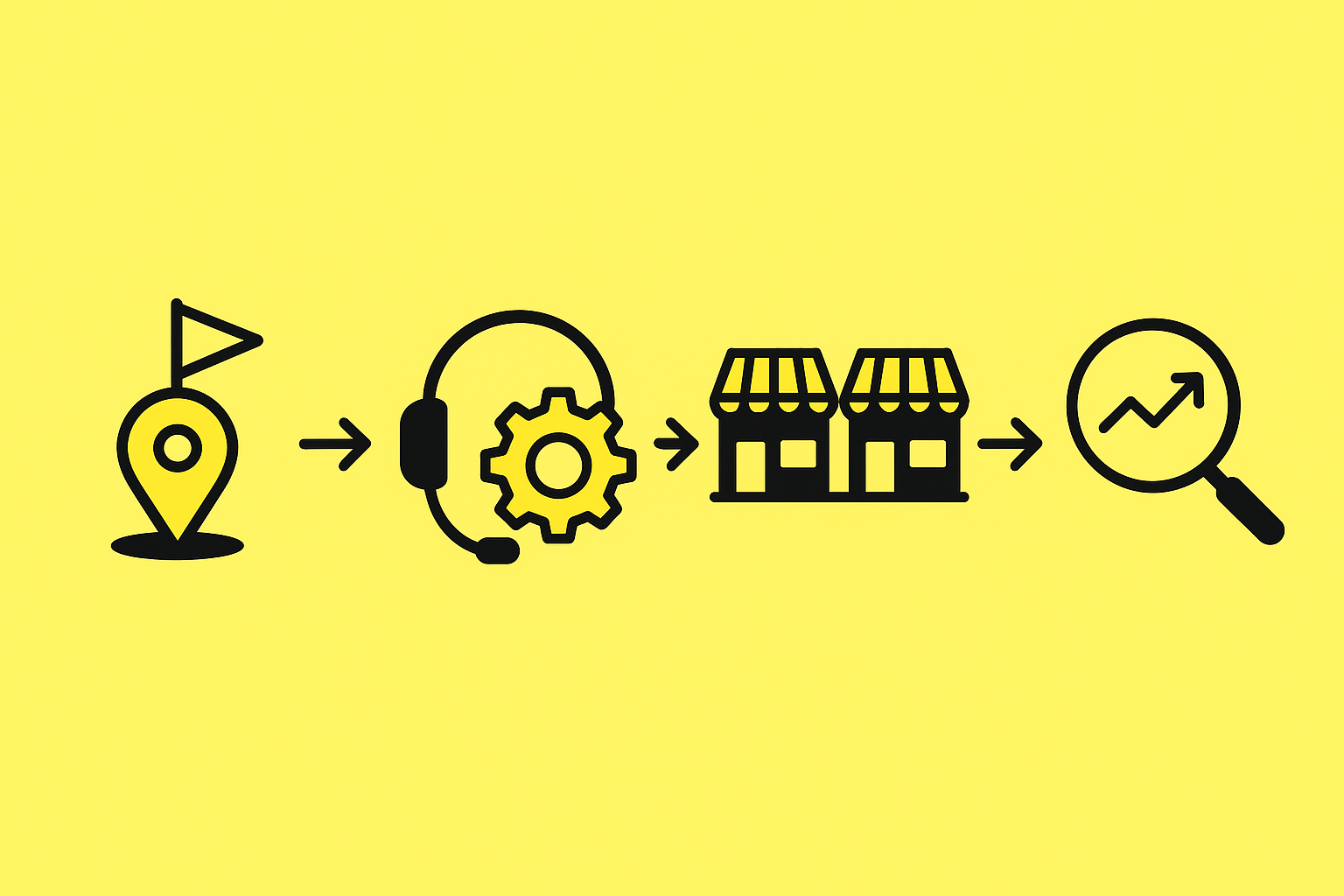
Rolling out AI across multiple locations requires a structured approach. Here is a proven timeline:
Week 1-2: Pilot Setup
Week 3-4: Testing and Staff Training
Week 5-8: Phased Rollout
Ongoing: Monitor and Optimize
With AI expected to power 95% of customer interactions by 2025, restaurants can no longer afford to operate with disconnected systems.
AI adoption is not without challenges. Here are the common pitfalls and how to avoid them:
Guest Acceptance
"I'm skeptical on the state of AI agents currently," says Sanjay Singhal of Coffee Oysters Champagne in Toronto. Some diners prefer human interaction, particularly at fine dining establishments. The solution is to position AI as a complement to human hospitality, not a replacement.
Data Privacy
Ensure your AI vendor complies with Canadian privacy regulations. Look for enterprise-grade security built on platforms like Google Cloud with compliance certifications.
Poor Training and Setup
Generative AI is only being used daily by 9% of those surveyed, and more respondents said they are in the planning stages than currently using it. Most organizations feel underprepared for AI adoption, lacking readiness in strategy, operations, and technology infrastructure.
Losing the Human Touch
As Lenny Lighter, former owner of Moishe's Restaurant in Montreal, notes: "Restaurants are rapidly becoming the last bastion of personal interaction in the retail space." Automated confirmations help minimize no-shows, while smart scheduling optimizes table utilization, but the warmth of human hospitality must remain central to your brand.
Here is how the leading voice AI platforms compare for Canadian restaurant operators:
| Platform | Peak Answer Rate | Languages | Best For | Price Point |
|---|---|---|---|---|
| Hostie AI | 97% | 20 | Full-service, fine dining | Starting at $199/month |
| Maple | Not disclosed | Multiple | Phone order automation | Contact for pricing |
| Slang.ai | Not disclosed | Multiple | Quick-service, casual | Contact for pricing |
| Newo.ai | Not disclosed | Multiple | High-volume reservations | Starting at $99/month |
Hostie AI stands out because it was built with one goal in mind: make every guest feel like they are talking to a real host. Matt Ho of Bodega SF chose Hostie after shopping around because "it's built specifically for restaurants" and "makes the job easier for the host and does not disturb guests while they're enjoying their meal," according to the Hostie benchmark report.
Over 1,000 restaurants rely on Maple to handle their phone orders, while Newo.ai reports potential additional revenue of $150K-$350K per location annually for their clients.
For Canadian operators prioritizing multilingual support and a premium guest experience, Hostie AI offers the most comprehensive solution with its 20-language capability and deep integrations with OpenTable, Toast, and SevenRooms.
The pressing question for Canadian restaurant operators is not whether to adopt AI solutions, but when and how. Here are the action items to consider:
The technology is ready. The market is moving. The question is whether you will lead or follow.
💡 Ready to see Hostie in action?
Don't miss another reservation or guest call. Book a demo with Hostie today at hostie.ai/sign-up.
AI restaurant software is a suite of cloud-based tools using machine learning and natural language processing to automate guest interactions and operational decisions, enhancing efficiency and customer experience.
AI restaurant software addresses labor shortages and rising guest expectations by automating routine tasks, allowing staff to focus on personalized service, crucial for Canadian operators facing staffing challenges.
Core technologies include voice AI for guest interactions, deep POS integrations for seamless data flow, and centralized dashboards for brand-wide visibility into operations and customer sentiment.
AI software can increase monthly revenue by $3,000 to $18,000 per location, with payback periods as short as 2-3 weeks, through enhanced reservation capture, labor cost savings, and upselling opportunities.
AI can manage 24/7 reservations, provide multilingual guest support, handle phone and chat inquiries, and optimize labor and inventory, improving both front- and back-of-house operations.
Hostie AI offers a 97% peak-hour answer rate, supports 20 languages, and integrates deeply with systems like OpenTable and Toast, making it ideal for full-service and fine dining restaurants.
RELATED