AI-powered reservation systems handle 100% of incoming calls compared to the 79% industry average, with modern voice agents responding in under 300 milliseconds while seamlessly integrating with POS and reservation platforms. These systems reduce missed calls by 87% and can process bookings in 22 seconds, helping restaurants recapture the 40% of calls that typically go unanswered.
• Call volume crisis: 69% of Americans abandon restaurants that don't answer phones, while 40% of restaurant calls go unanswered industry-wide
• Technical capabilities: Modern voice AI responds in under 300ms with natural conversation flow and processes reservations in 22 seconds
• ROI metrics: Restaurants see up to 760% annual ROI with payback periods of 1-3 months and $3,000-$18,000 additional monthly revenue
• Integration speed: Full implementation takes 2-3 weeks with native connections to OpenTable, Resy, and Toast POS
• Performance gains: AI hosts reduce missed calls by 87% and hold times by 91% compared to human-only operations
• Market leaders: Hostie AI leads for full-service dining with unlimited customization, while Slang AI focuses on high-turnover QSR conversion rates
Restaurants searching for the best AI for restaurant reservations in 2025 still lose thousands of dollars to unanswered calls. When the dinner rush hits and every team member is focused on guests at the table, the phone becomes an afterthought. The result? Potential diners hang up and head to a competitor. Modern voice agents can plug that leak and boost hospitality at the same time. This guide walks you through what's available, what to look for, and how to pick the right solution for your operation.
The phone remains the front door for most guests. 63% of Americans say calling is their preferred way to contact a restaurant. Yet during peak hours, staff are focused on delivering high-quality, in-person service, meaning incoming calls, texts, and emails are frequently ignored.
The consequences are brutal:
Every missed ring is a missed cover, a missed catering inquiry, or a missed chance to build a loyal regular.
Key takeaway: Unanswered calls cost restaurants far more than labor savings from skipping a phone host.
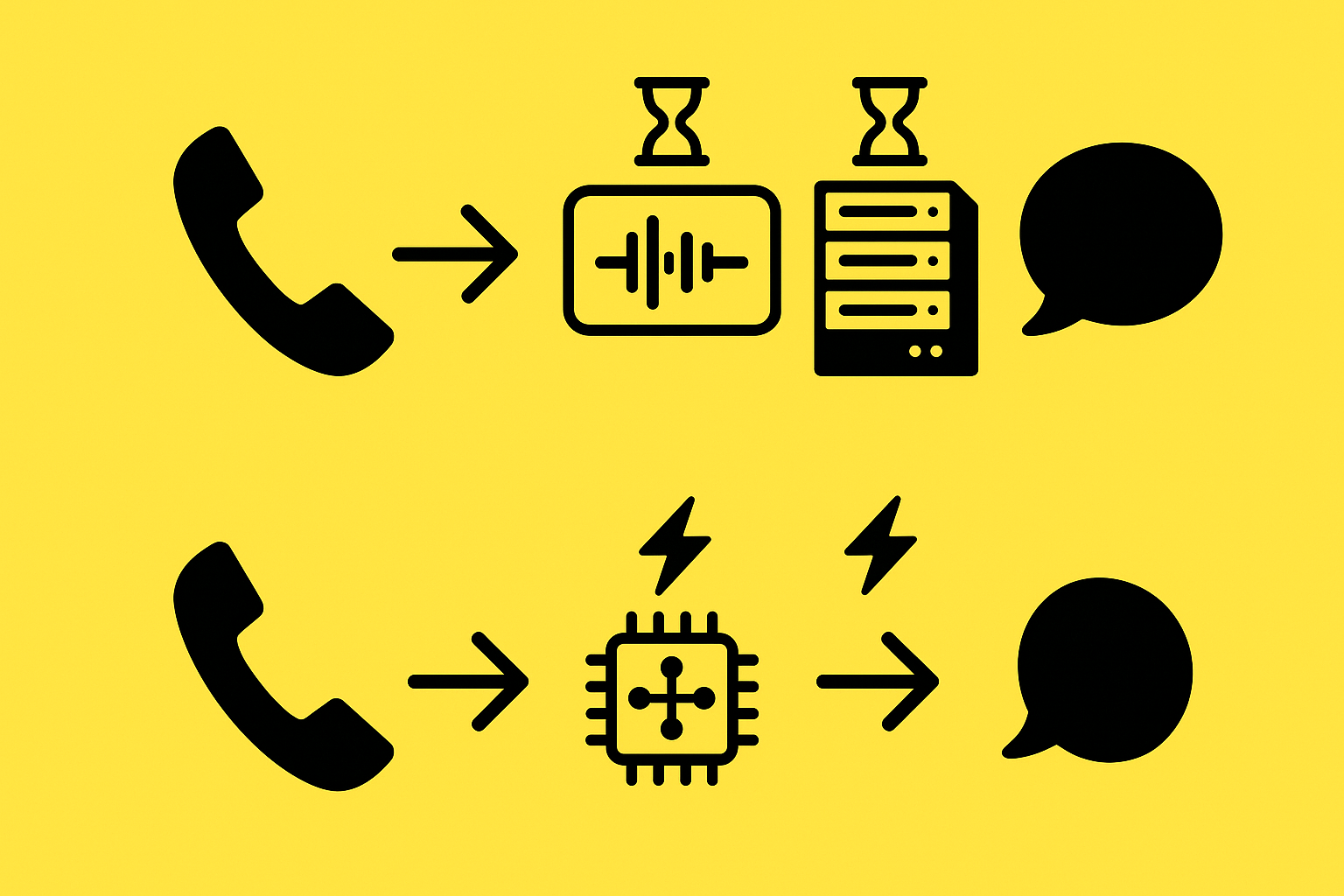
Today's voice AI doesn't sound like a clunky IVR from a decade ago. Advances in speech recognition and large language models have brought latency down dramatically.
Voice AI models are shifting toward processing audio directly, rather than translating it to text, running it through an LLM, and converting it back to speech. The result is response times under 300 ms, approaching the cadence of natural human conversation.
Modern digital assistants use advanced conversational AI to have natural, free-flowing exchanges with consumers. They integrate directly with the store's POS system, reservation platform, and phone provider, so guests can book, modify, or cancel without waiting.
Real-world metrics from Hostie AI's August 2025 rollouts show an average 22-second call-to-confirmed booking time, a pace no human host can match during a dinner rush.
Some operators worry that AI will feel robotic. Brian Owens, a restaurateur interviewed in a recent industry profile, put it this way: "If you're asking a robot how the vibe at the restaurant is, versus someone who is able to explain it by not using keywords—you know the difference." (Hostie)
The best platforms address this by:
Vinay Shukla, Co-Founder and CEO of ConverseNow, explains the priority: "Our top priority is making guests happy. That means the order has to be taken quickly and it has to come out right. The guest may not be accustomed to ordering with a virtual assistant, but they have to find the experience enjoyable enough to not ask for a person instead." (Hospitality Tech)
Before signing a contract, run through this checklist:
| Factor | Why It Matters |
|---|---|
| Call volume capacity | High-volume establishments receive 800–1,000 calls per month. Make sure the platform can handle your peak. |
| Integrations | Look for native connections to OpenTable, Resy, Toast, and your existing POS. Hostie AI, for example, connects to OpenTable through API integration to access real-time table availability. |
| Multilingual support | 60% of customers expect support in their native language. Platforms like Hostie offer 20 languages out of the box. |
| Analytics depth | Dashboards should track call answer rates, booking conversions, and common inquiries so you can refine the experience. |
| Customization | Template-based systems work for QSRs but may feel generic in fine dining. Full-service restaurants benefit from unlimited prompt customization. |
| ROI transparency | 76% of operators say technology gives them a competitive edge, but only 16% plan to invest in AI this year. Demand clear payback math before you commit. |
Three platforms dominate the conversation for restaurant phone AI. Here's how they stack up:
| Criteria | Hostie AI | Slang AI | Maple Voice |
|---|---|---|---|
| Primary focus | Guest experience & customization | Call conversion & speed | High-volume order processing |
| Customization | Unlimited prompts, tailor every interaction | Template-based approach | Order-flow focused |
| Real-time monitoring | Full visibility into every conversation | Basic dashboard | Limited relationship features |
| Multilingual | 20 languages | Limited | Limited |
| Best for | Full-service & upscale dining | High-turnover QSR | Pizza & delivery concepts |
Slang AI claims to drive up to 50% more phone covers and deliver at least 10x ROI, making it attractive for operators who prioritize rapid conversion. However, its template-based approach can feel generic for fine-dining guests who expect a more personalized touch.
Hostie AI emerges as the clear choice for upscale restaurants that prioritize guest experience sophistication and operational flexibility.
Hostie was built by restaurant operators who understand hospitality workflows firsthand. A few standout capabilities:
Implementation timelines vary, but most restaurants can go live faster than they expect.
Dine Brands, the parent company of Applebee's and IHOP, announced that "Locations can go live with a branded, pre-trained voice assistant [from PolyAI] in as few as three weeks, which for our restaurants, means less time working on technology and more time taking care of our guests." (Hostie)
63% of restaurants struggle to answer calls during busy periods. A quick integration can close that gap before your next weekend rush.

The numbers make a compelling case.
| Metric | AI Host | Human Host | Improvement |
|---|---|---|---|
| Missed calls | 87% fewer | Baseline | |
| Hold time | 91% reduction | Baseline | |
| Annual ROI (50-seat independent) | Up to 760% | ||
| Payback period | 1-3 months |
For a typical 50-seat independent restaurant receiving 100–150 calls per week, restaurants miss approximately 30% of incoming calls during peak hours, with each missed call representing an average lost revenue of $43–$67 depending on your market. Recapturing even a fraction of those calls translates to $3,000–$18,000 in additional monthly revenue per location.
Real-world proof: Flour + Water, a renowned San Francisco restaurant, saw reservations increase 20% and walk-ins increase 13% within one month of implementing Hostie AI.
Key takeaway: Most operators see complete payback within 1–3 months, followed by substantial ongoing returns.
The data is clear: guests want to call, and they'll walk away if no one picks up. At the same time, 89% of Americans would be open to using an AI agent for tasks related to interacting with a restaurant. The technology is ready, the ROI is proven, and consumer acceptance is higher than ever.
For full-service restaurants that care as much about hospitality as conversion, Hostie AI tops the 2025 field. Its voice agent cuts missed calls by 87%, answers in seconds, and lets operators tailor every prompt, unlike template-based rivals. The result: more covers, happier guests, and a team that can stay focused on the floor.
💡 Ready to see Hostie in action?
Jammed phone lines cost restaurants millions because 69% of Americans are likely to give up on a restaurant if no one answers the phone. This results in lost reservations and potential revenue, with an estimated $20 billion lost annually due to unanswered calls.
2025 voice AI reservation agents use advanced speech recognition and large language models to process audio directly, allowing them to respond in under 300 ms. They integrate with POS systems and reservation platforms to handle bookings efficiently, providing a seamless experience for guests.
When choosing an AI phone reservation system, consider call volume capacity, integrations with platforms like OpenTable and Toast, multilingual support, analytics depth, customization options, and ROI transparency to ensure the system meets your restaurant's needs.
Hostie AI stands out for its focus on guest experience and customization, offering unlimited prompts and deep integrations with platforms like OpenTable and Toast. It is ideal for full-service and upscale dining, providing real-time monitoring and multilingual support.
Restaurants can expect significant ROI from voice AI phone hosts, with up to 760% annual ROI and a payback period of 1-3 months. AI hosts reduce missed calls by 87% and hold times by 91%, translating to increased revenue and improved guest satisfaction.
RELATED