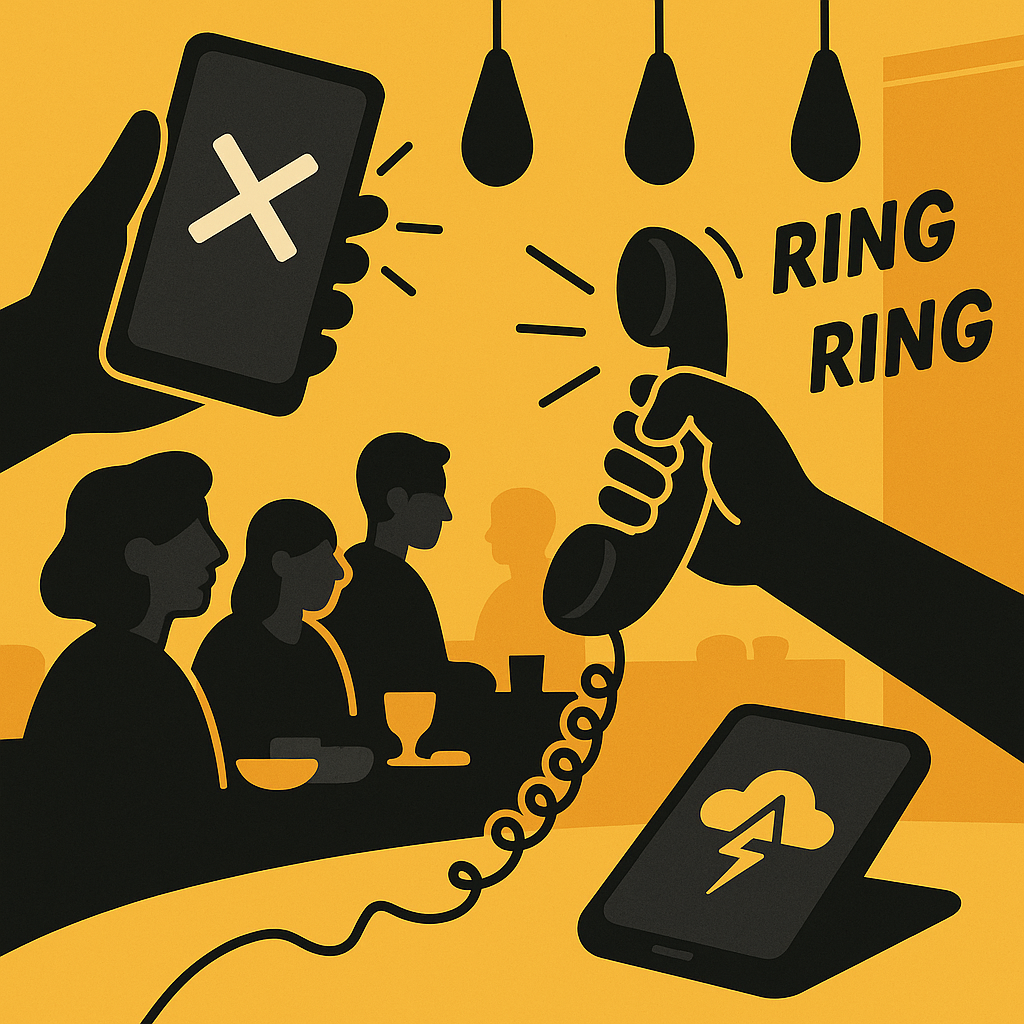
When AI phone answering systems crash during the 6-8 p.m. dinner rush, restaurants can lose hundreds of calls in just two hours, with 69% of Americans giving up on establishments that don't answer. The solution requires 99%+ uptime SLAs, hybrid AI-human routing, deep POS integrations, and real-time monitoring to detect issues within minutes, not hours.
Dinner service can unravel fast when AI phone answering system outages strike. Between 6 and 8 p.m., your floor is packed, your kitchen is firing on all cylinders, and the phone is ringing off the hook. If your voice AI goes dark at that exact moment, you are not just missing calls. You are losing reservations, frustrating guests, and watching revenue walk out the door.
This guide shows restaurateurs exactly how to protect revenue and hospitality during the busiest window of the night.
The dinner rush is when phone traffic collides with floor chaos. Staff are laser-focused on guests in the dining room, which means incoming calls often go unanswered. According to Hostie research, 63% prefer calling a restaurant. When those calls hit voicemail or dead air, the stakes are steep.
More than two-thirds of Americans (69%) say they would give up on a restaurant if no one answers the phone. That is not a minor inconvenience. It is lost covers, lost revenue, and a dent in your reputation.
When a major AI platform experiences issues, the ripple effects are immediate. During one ChatGPT outage, roughly 3,000 people reported problems on Downdetector in a single day. For restaurants relying on AI-powered phone systems, a similar spike during dinner service can mean hundreds of missed calls in just two hours.
Key takeaway: The 6–8 p.m. window is when call volume peaks and staff availability bottoms out, making AI reliability non-negotiable.
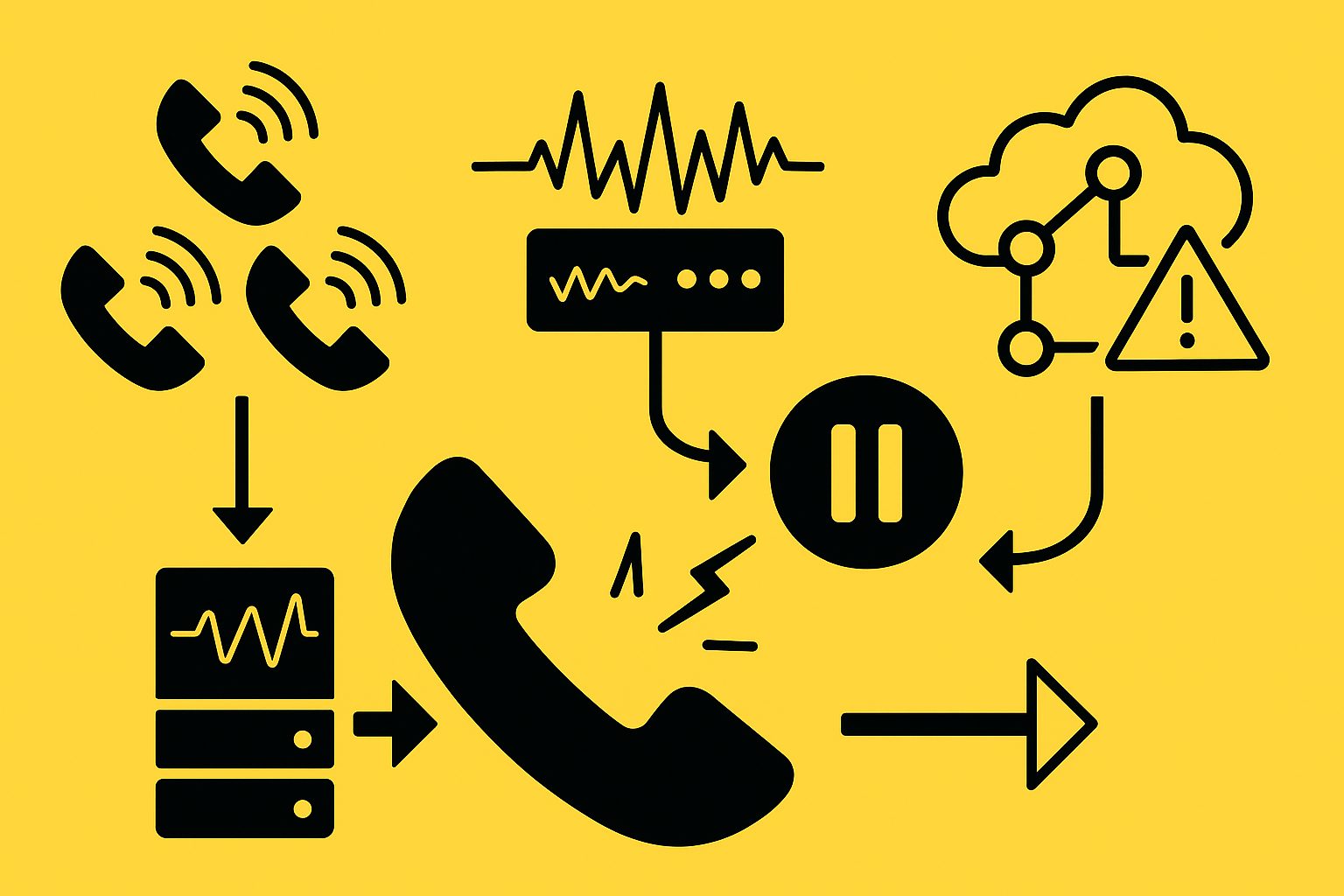
Understanding why voice AI systems fail helps you prepare for the worst. The culprits usually fall into a few categories.
Popular restaurants receive a staggering number of calls. Slang's CEO estimates that in-demand establishments get 800 to 1,000 calls per month. During dinner rush, that volume compresses into a narrow window, stressing voice stacks and increasing latency.
Many AI voice agents struggle under pressure. Callers report being asked to wait while the system conjures an answer, or encountering static silence before any reply. That hesitation frustrates guests and erodes trust.
Not all outages stem from traffic. Sometimes, the problem is a routing error deep in the cloud infrastructure. OpenAI attributed one major outage to "a routing misconfiguration," according to CNBC, which knocked services offline for hours.
When your voice AI depends on external APIs or third-party cloud providers, a misconfiguration upstream can cascade into your phone lines. Downdetector spikes often reveal these issues before your vendor even acknowledges them.
A strong service level agreement (SLA) is your insurance policy against outages. Here is what to look for.
| Metric | Target | Why It Matters |
|---|---|---|
| Monthly Uptime | ≥99% | Limits downtime to ~7 hours 18 minutes per month |
| Mean-Time-to-Restore (P1) | ≤4 hours | Ensures critical outages are resolved fast |
| Notification Window | ≤15 minutes | Gives you time to activate fallbacks |
Cisco's managed-service benchmarks show that Priority-1 incidents should be restored within 4 hours, with notification to designated contacts within 15 minutes of ticket creation. Telnyx advertises a 99% uptime guarantee on its private global IP network, showing these targets are achievable.
The Violated Interval Ratio (VIR) and Severely Violated Interval Ratio (SVIR) are precision metrics that help assess whether a service is provided in compliance with its SLOs. Ask your vendor how they measure and report these.
Key takeaway: Do not sign with any voice AI provider that cannot commit to 99%+ uptime with clear restoration timelines and proactive notifications.
Not all AI phone platforms are built the same. When evaluating vendors, focus on reliability and integration depth.
Limited APIs amplify downtime risk. If your voice AI cannot talk directly to your reservation system, every outage forces manual workarounds that slow recovery. Slang's integrations are more limited, often requiring workarounds that add friction during high-pressure moments.
Hostie was designed to plug into the tools restaurants already use, from widely used reservation systems to event management tools. That deep connectivity means fewer failure points and faster recovery when something goes wrong.
Telnyx emphasizes that its AI assistants operate on a private global IP network, reducing reliance on public internet routing. SoundHound clients have reported an 11% increase in revenue over locations without AI, but that lift only happens when the system stays online.
For a detailed comparison, see our guide on Hostie vs. Slang.
Real-world results prove that proactive tuning prevents outages from becoming disasters.
Amanda Flores, Director of Operations at Flour + Water, partnered with Hostie AI and saw immediate impact. "We learned were getting up to 1,000 calls per week," she shared. "Everyone, including Hostie, was surprised at the actual volume of requests we were getting. And we immediately started tweaking the service to make sure people were getting answers. Just four weeks in, we had over 1,300 phone calls resolved through AI."
That kind of volume management keeps the phone lines humming even when the floor is slammed. Hostie's system also offers to text callers additional information and flags unresolved issues for follow-up within 24 hours, so no inquiry slips through the cracks.
At Burma Food Group, over-the-phone bookings at Teakwood nearly tripled after implementing Hostie. Blue Square Pizza, using SoundHound's AI, handles its Friday night rush without missing a beat, saving $11,000 annually in the process.
For more on how operators are implementing virtual concierges, read our case study on Burma Food Group's 141% boost.
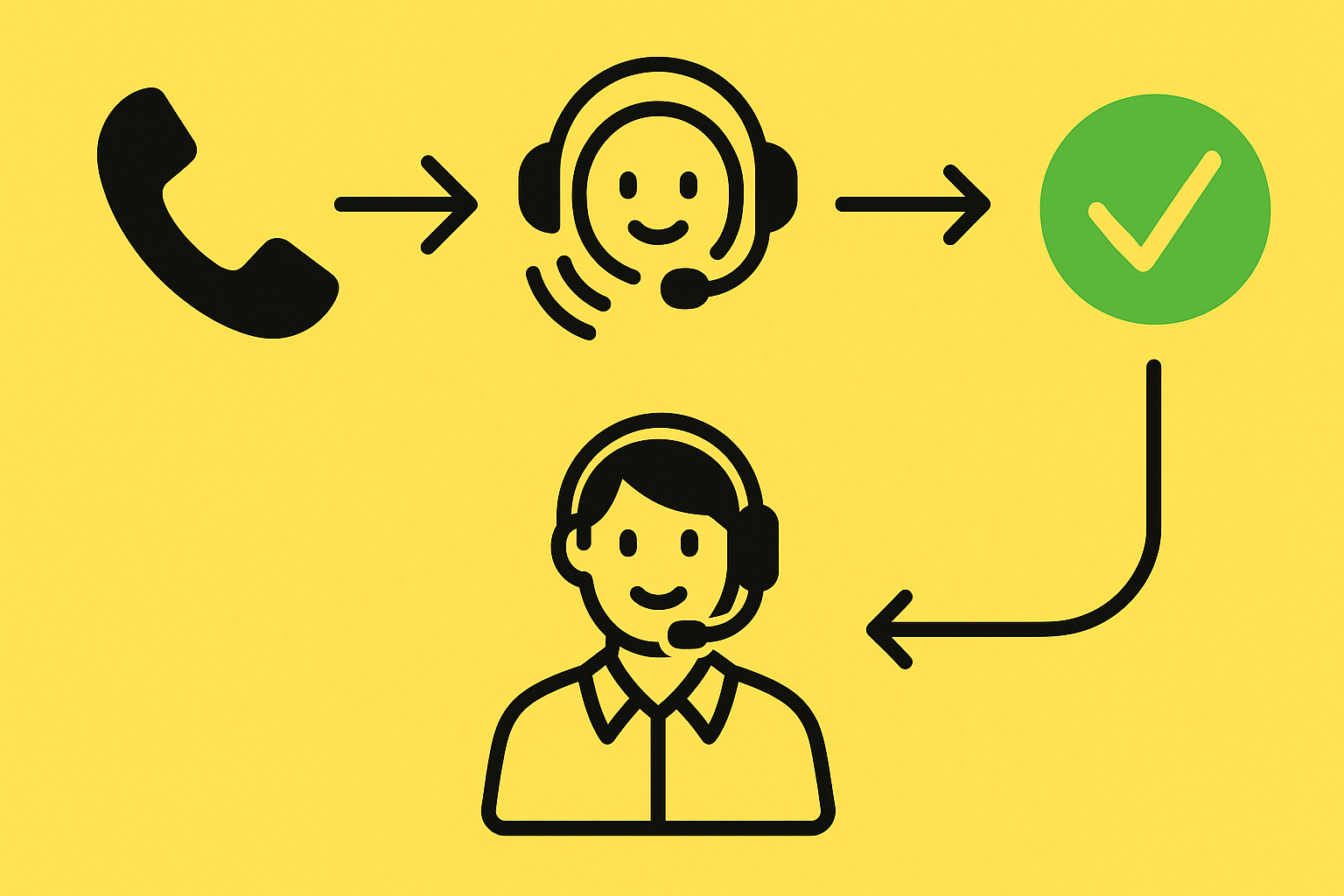
Even the best AI needs a safety net. Hybrid routing lets you toggle calls to a live host when the AI stalls.
The logic is simple:
SoundHound's Smart Ordering system eliminates hold times by answering calls on the first ring, then frees staff to serve guests in person. As a Five Guys franchise partner noted, the AI provides "welcome support to our employees, particularly during peak hours," delivering a fast, consistent ordering experience.
Yelp's AI answering service operates 24/7, even during peak call volume hours or after closing time. That round-the-clock coverage ensures no reservation request goes unanswered, even if your in-house staff is fully occupied.
For a deeper dive into fallback workflows, check out our guide on AI-human hybrid routing strategies.
Fast detection is the first step to fast recovery. Here is how to build a monitoring stack.
| Monitoring Tool | Purpose | Action Trigger |
|---|---|---|
| Downdetector | Crowdsourced outage detection | Spike in user reports |
| Vendor Status Page | Official incident updates | Status change to "degraded" or "outage" |
| Internal Dashboard | Real-time answer rates & latency | Error rate exceeds threshold |
| Backup Routing Plan | Failover to human hosts | AI unresponsive for 2+ prompts |
Key takeaway: Proactive monitoring turns a potential crisis into a minor hiccup.
AI phone answering system outages do not have to derail your dinner service. With the right SLA, deep integrations, hybrid routing, and real-time monitoring, you can protect revenue and guest experience even when technology stumbles.
Restaurants using Hostie report measurable ROI fast: more reservations booked, more walk-ins captured, and fewer missed calls, all while freeing up staff to focus on hospitality. Hostie gives operators full visibility into every conversation in real time, and its restaurant-operator heritage means the platform was built by people who understand the dinner rush firsthand.
Do not let another busy night slip away because the phone went unanswered.
💡 Ready to see Hostie in action?
Outages often occur during dinner rush due to high call volumes and staff focusing on in-person guests, leading to missed calls and lost revenue. AI systems can struggle with traffic spikes, causing latency and service interruptions.
Common causes include traffic spikes, model latency, and cloud or network misconfigurations. These issues can lead to delays or outages, especially during peak hours when call volumes are high.
Restaurants can mitigate outages by ensuring their AI provider offers a strong SLA with high uptime guarantees, integrating deeply with POS and reservation systems, and implementing hybrid routing to switch to human hosts when needed.
An SLA should include metrics like monthly uptime (≥99%), mean-time-to-restore (≤4 hours), and notification windows (≤15 minutes) to ensure quick resolution of outages and minimal disruption to service.
Hostie AI integrates with existing restaurant tools to reduce failure points and offers hybrid routing to ensure calls are answered promptly, even during peak hours, enhancing guest experience and protecting revenue.
RELATED