AI restaurant software handles lunch rush calls by answering instantly with sub-second response times, integrating directly with POS systems like Toast and reservation platforms like OpenTable. Leading platforms achieve 97% peak-hour answer rates, dramatically reducing the 20-40% of calls typically missed during busy periods while supporting multilingual service and automated booking management.
Phones ring off the hook at noon, but modern AI restaurant software now answers every call without adding payroll. If you have ever watched a host juggle a ringing phone, a line of walk-ins, and a server waving for help at the same time, you know the stakes. This guide breaks down the platforms that can finally solve that problem in 2025.
The midday crunch is when most restaurants lose the most revenue to unanswered calls. 63% of Americans say calling is their preferred way to contact a restaurant, yet during peak hours staff are focused on delivering in-person service. The result? Incoming calls, texts, and emails are frequently ignored.
That ignored call has real consequences. More than two-thirds of Americans say they will give up on a restaurant if no one answers the phone. Every missed ring is a lost reservation, a canceled takeout order, or a guest who simply moves on to a competitor.
As Randall Hom, co-founder and CEO of Hostie, puts it: "As a restaurant owner myself, I know how difficult it can be to balance being on the floor during peak service hours while managing inbound calls, texts and emails from potential guests."
AI voice assistants offer a way out. 89% of Americans say they would be open to using an AI agent to interact with a restaurant, signaling strong guest acceptance of the technology.
Key takeaway: Unanswered calls during the lunch rush can drive nearly 70% of potential guests away, but diners are ready for AI to fill the gap.
How many calls are we really talking about? In-demand establishments receive between 800 and 1,000 calls per month, with restaurants averaging 187 calls daily. Those calls spike hard between 11 a.m. and 1 p.m., precisely when your team is slammed.
Staffing a dedicated host to answer the phone is expensive. At $17 per hour, entry-level host wages barely cover commuting costs, so turnover is constant. Recruiting, training, and replacing hosts drains time and money.
Meanwhile, guests keep calling with questions easily found on a website. "The phones would ring constantly throughout service," one restaurateur noted. "We would receive calls for basic questions that can be found on our website."
The math favors automation:
| Challenge | Impact |
|---|---|
| Monthly call volume (popular spots) | 800-1,000 calls |
| Daily call average | 187 calls |
| Callers who abandon if unanswered | 69% |
| Restaurants with effective call routing | Only 30% |
An AI phone answering system absorbs these calls instantly, freeing your team to focus on the guests already in the dining room.
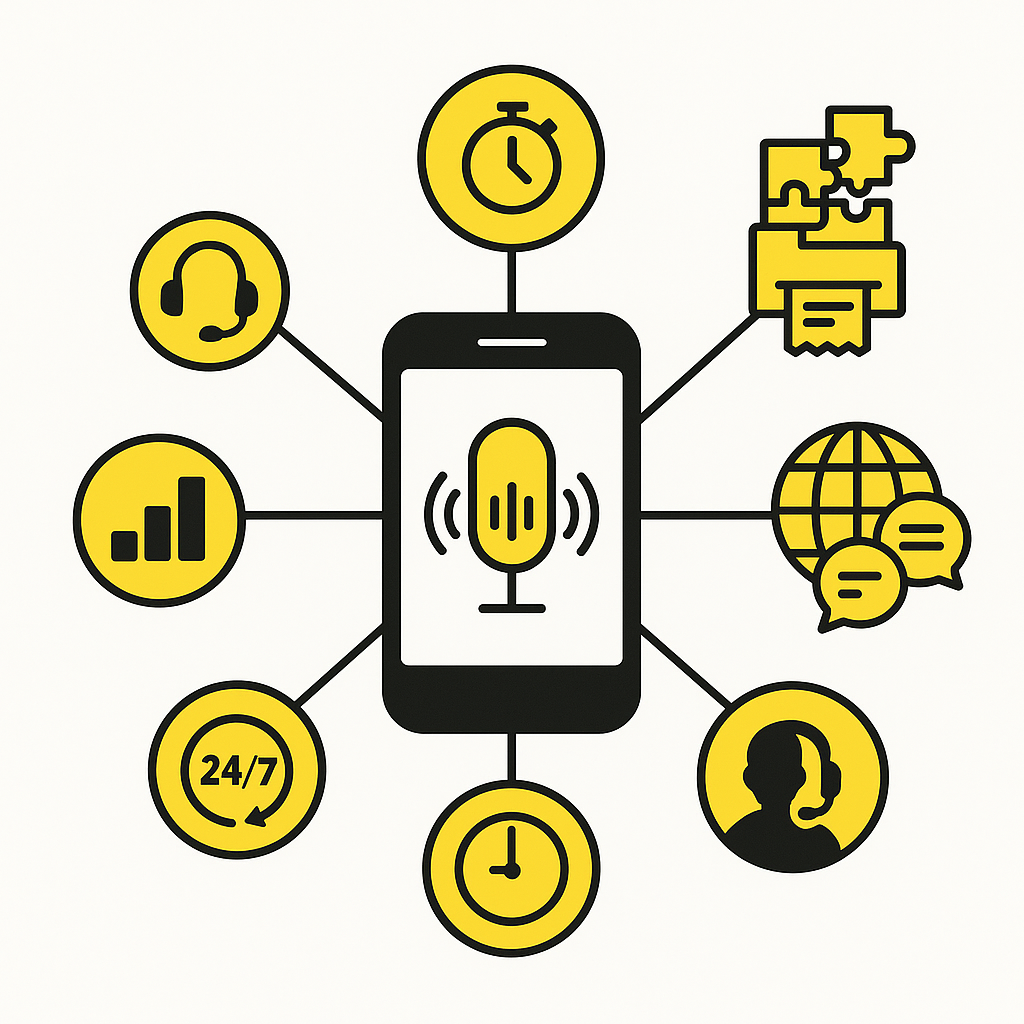
Not every AI voice assistant is built for hospitality. Here is a checklist to guide your search:
Conversational AI solutions improve customer experience through personalization via advanced natural language understanding and large language models while automating routine inquiries.
In 2025, three platforms dominate the restaurant AI voice assistant landscape: Hostie AI, Slang AI, and Maple Voice. A fourth regional player, RestoHost, is scaling fast in select markets.
Restaurant phone lines are the unsung heroes of revenue generation. Every missed call represents lost reservations, takeout orders, and customer relationships that could have driven thousands in lifetime value.
Hostie AI launched in the Bay Area in 2024 with a simple premise: design voice AI the way a seasoned host would think. The platform achieves an industry-leading 97% peak-hour answer rate based on a 500,000-call study, compared to the industry average of 20-40% missed calls during rush periods.
Matt Ho of Bodega SF chose Hostie after shopping around because "it's built specifically for restaurants" and "makes the job easier for the host and does not disturb guests while they're enjoying their meal."
Key strengths:
Slang started focusing on restaurants exclusively during the COVID-19 pandemic and announced a $20 million funding round in 2023. The company is gaining ground in the New York and Las Vegas markets.
Slang emphasizes turning calls into revenue opportunities with built-in upsell prompts. However, the platform concentrates on voice interactions rather than multi-channel communication. Restaurants that rely heavily on texts and emails may find the feature set limited.
Maple Voice targets quick-service and high-volume concepts where speed and order accuracy matter most. The platform provides white-glove onboarding and focuses on call conversion for phone orders.
Maple integrates with OpenTable, Resy, and popular POS systems, and it handles after-hours and peak-time calls automatically. If your operation thrives on phone orders rather than reservations, Maple deserves a look.
RestoHost is now answering calls at 150 restaurants in the Atlanta metro area. The company is expanding quickly, though its footprint remains regional. Operators in the Southeast may find RestoHost offers strong local support, but national groups should verify coverage before committing.
AI phone hosts pay for themselves quickly. Benchmarks across 500,000 calls show operators can achieve ROI within three to six months.
The upsell opportunity is often overlooked. AI assistants achieved a 23.7% upsell success rate compared to 18.9% for human hosts during peak hours, thanks to consistent prompts and zero fatigue.
Key takeaway: Expect payback in three to six months, with monthly revenue lifts that dwarf the subscription cost.
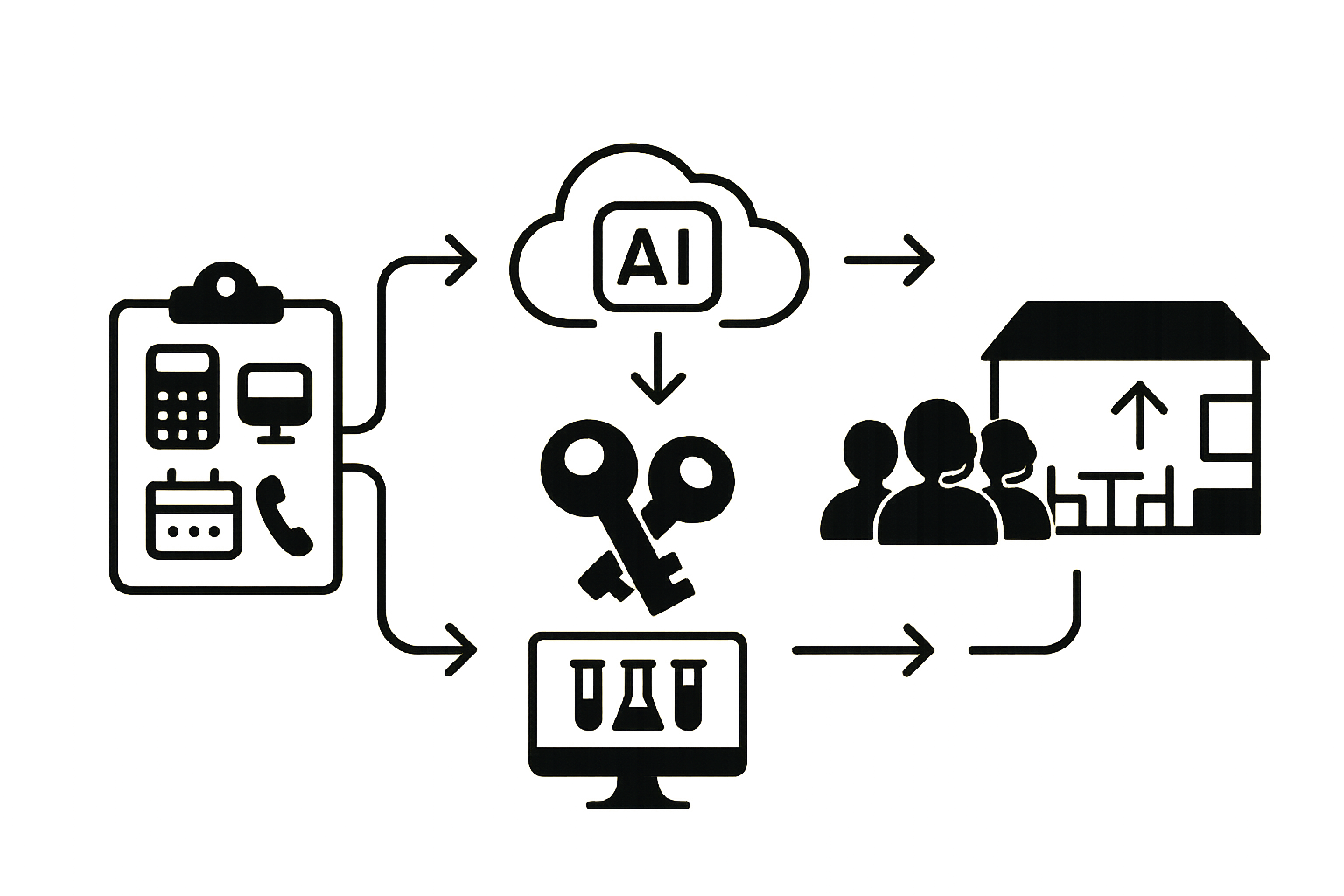
Integration no longer requires a six-month IT project. Here is a practical roadmap:
With AI expected to power 95% of customer interactions by 2025, restaurants can no longer afford to operate with disconnected systems. Native Toast Partner Connect API integration means most operators complete setup in under two weeks.
AI voice assistants are powerful, but they are not foolproof. Keep these risks on your radar:
Balance efficiency with warmth by ensuring seamless handoffs to staff for complex or sensitive conversations.
The lunch rush does not have to mean lost revenue. AI restaurant software has matured to the point where it can answer every call, book reservations in 20 languages, and integrate with your existing POS in under two weeks.
Start by measuring your current missed-call rate and guest satisfaction scores. Then evaluate platforms against the checklist above: latency, integrations, multilingual support, analytics, and compliance.
Hostie AI stands out for operators seeking a solution built by people who have actually run restaurants. With a 97% peak-hour answer rate, native Toast and OpenTable integrations, and transparent pricing, it delivers measurable ROI without sacrificing the hospitality your guests expect.
💡 Ready to see Hostie in action?
Don't miss another reservation or guest call.
👉 Book a demo with Hostie today
During peak lunch hours, many restaurants miss calls due to staff focusing on in-person service. This results in lost reservations and potential customers moving to competitors, as 63% of Americans prefer calling restaurants.
AI voice assistants can handle calls efficiently, reducing missed calls by 87% and increasing reservations by 23%. They offer 24/7 availability, multilingual support, and seamless integration with existing systems, enhancing customer experience and operational efficiency.
When evaluating AI software, look for low latency, deep POS and reservation integrations, multilingual support, 24/7 availability, comprehensive analytics, and a human escalation path to ensure seamless operations and customer satisfaction.
Hostie AI offers native integration with major reservation and POS systems like Toast and OpenTable, allowing for seamless management of guest communication and reservations. Setup can be completed in under two weeks with minimal IT involvement.
Restaurants can expect a payback period of three to six months, with revenue gains ranging from $3,000 to $18,000 per month per location. AI hosts significantly reduce labor costs and missed calls, enhancing overall profitability.
RELATED