
Modern AI phone answering systems handle 200 simultaneous calls using cloud infrastructure that pools multiple agents, each managing up to 50 concurrent conversations. Leading platforms achieve this through scalable architectures that can process thousands of simultaneous calls on a single number, ensuring no busy signals during Saturday night rushes when restaurants average 187 daily calls.
• AI systems reduce hold times by 91% and missed calls by 87% compared to human hosts during peak hours
• Cloud-based platforms can scale from 100 to 100,000 calls seamlessly, with each AI agent handling 50 concurrent conversations
• Implementation delivers 30-50% cost reductions in telecommunications operations while increasing contact rates by 300-400%
• AI assistants achieve 23.7% upsell success rates versus 18.9% for human hosts during busy periods
• Integration with OpenTable and Toast POS systems takes 48 hours for complete deployment
• Real restaurants like Flour + Water handle over 1,000 weekly calls through AI, with The Slanted Door Group seeing 56% increases in phone reservations
It's 7 p.m. on a Saturday. Your dining room is packed, the kitchen is firing on all cylinders, and the phone won't stop ringing. Guests at the host stand need seating. Servers need to run food. And somewhere in the chaos, line two is blinking with a party of six hoping to snag the last open table. Traditional phone setups buckle under this pressure, but an AI phone answering system changes the equation entirely. Modern cloud-based platforms can juggle 200 simultaneous calls without breaking a sweat, keeping every guest happy while your team stays focused on the floor.
In-demand restaurants receive between 800 and 1,000 calls per month, with averages hitting 187 calls daily. On a busy Saturday, that volume spikes dramatically during the dinner rush. AI calling systems can initiate and manage dozens, hundreds, or thousands of calls concurrently, depending on the infrastructure supporting them. Compare that to a single host juggling a ringing phone, a waitlist, and guests at the door.
The math is simple: one person can only answer one call at a time. Cloud-based platforms, meanwhile, can carry thousands of simultaneous calls on the same number with consistent quality. When the Saturday rush hits, that difference means the gap between a fully booked dining room and a stack of missed reservations.
Every unanswered call carries a price tag. AI online assistants result in 87% fewer missed calls compared to live hosts during peak restaurant hours. That translates directly to revenue: one missed reservation from a party of four can easily be $100 or more in lost revenue.
Beyond the immediate financial hit, long hold times erode guest loyalty. A study analyzed over 500,000 restaurant calls and found a striking 91% drop in hold time when AI handles the phone. Guests who wait less feel more valued, and that goodwill shows up in reviews, repeat visits, and word-of-mouth recommendations.
Key takeaway: Missed calls and hold music don't just frustrate guests; they drain revenue and damage your reputation one ring at a time.

Scalability is the backbone of any AI phone answering system. Every AI agent can concurrently handle a max of 50 calls or 50 SMS conversations at once. For high-volume use cases, you can create multiple AI agents to handle the same calls using a queue to round-robin the calls among those agents. That architecture means a restaurant expecting 200 calls simply pools four or five agents together and handles the surge without a single busy signal.
The migration to cloud-based solutions is happening at all levels of scale, from single-location bistros to national chains. Cloud infrastructure removes the ceiling on call capacity, letting restaurants scale up on demand. AI call answering services can handle from 100 to 100,000 calls seamlessly, making the 200-call Saturday night scenario well within reach.
Speed matters as much as capacity. Latency is largely dependent on model type and token count, but well-optimized systems deliver near-instant responses. Request-level latency represents the average time elapsed between the request submission and the completion of the request, such as after the last token of the request was generated.
When a caller hears an answer within a second or two, they stay on the line. When they wait, they hang up. The combination of high throughput (handling many calls) and low latency (responding quickly) keeps guests engaged and prevents abandoned calls.
Theory is one thing; results are another. Flour + Water, the acclaimed San Francisco restaurant, partnered with Hostie AI and discovered the true volume of incoming requests. Amanda Flores, Director of Operations, shared the outcome:
"We learned we were getting up to 1,000 calls per week. Everyone, including Hostie, was surprised at the actual volume of requests we were getting. And we immediately started tweaking the service to make sure people were getting answers. Just four weeks in, we had over 1,300 phone calls resolved through AI." — Hostie AI
The Slanted Door Group saw similar gains. In the past month, Hostie has answered nearly 1,200 calls across San Ramon and Napa locations. Since using Hostie, Slanted Door Napa has increased over-the-phone covers by 56%, with walk-ins up 61%. These aren't hypothetical improvements; they're measurable outcomes from real Saturday nights.
Choosing the right platform means weighing features, pricing, and restaurant-specific capabilities. Here's a quick comparison:
| Platform | Concurrency | Restaurant Focus | Notable Detail |
|---|---|---|---|
| Aircall | Thousands of simultaneous calls | General business | Trusted by 22,000+ companies |
| Yelp Host | Not specified | Restaurants | $149/month for 500 calls |
| Twilio | Highly scalable | Developer-focused | Highest scores in 3 of 5 CPaaS use cases |
| Callin.io | 100 to 100,000 calls | Restaurants | Restaurant-specific templates |
| Hostie AI | 200+ with pooled agents | Restaurants | 22-second average call-to-booking time |
Aircall offers impressive raw capacity but targets general business use cases. Yelp Host provides restaurant integrations at a fixed price point, though concurrency details are limited. Twilio excels in developer flexibility but requires technical expertise to customize. Callin.io offers restaurant templates, though it lacks the hospitality-specific focus of a dedicated solution.
Hostie AI stands apart by combining cloud-scale concurrency with deep restaurant integrations. AI call answering services can handle multiple calls at once, reducing wait times for customers, and Hostie's real-world metrics from August 2025 show an average 22-second call-to-confirmed booking time. That speed keeps guests on the line and tables filled.
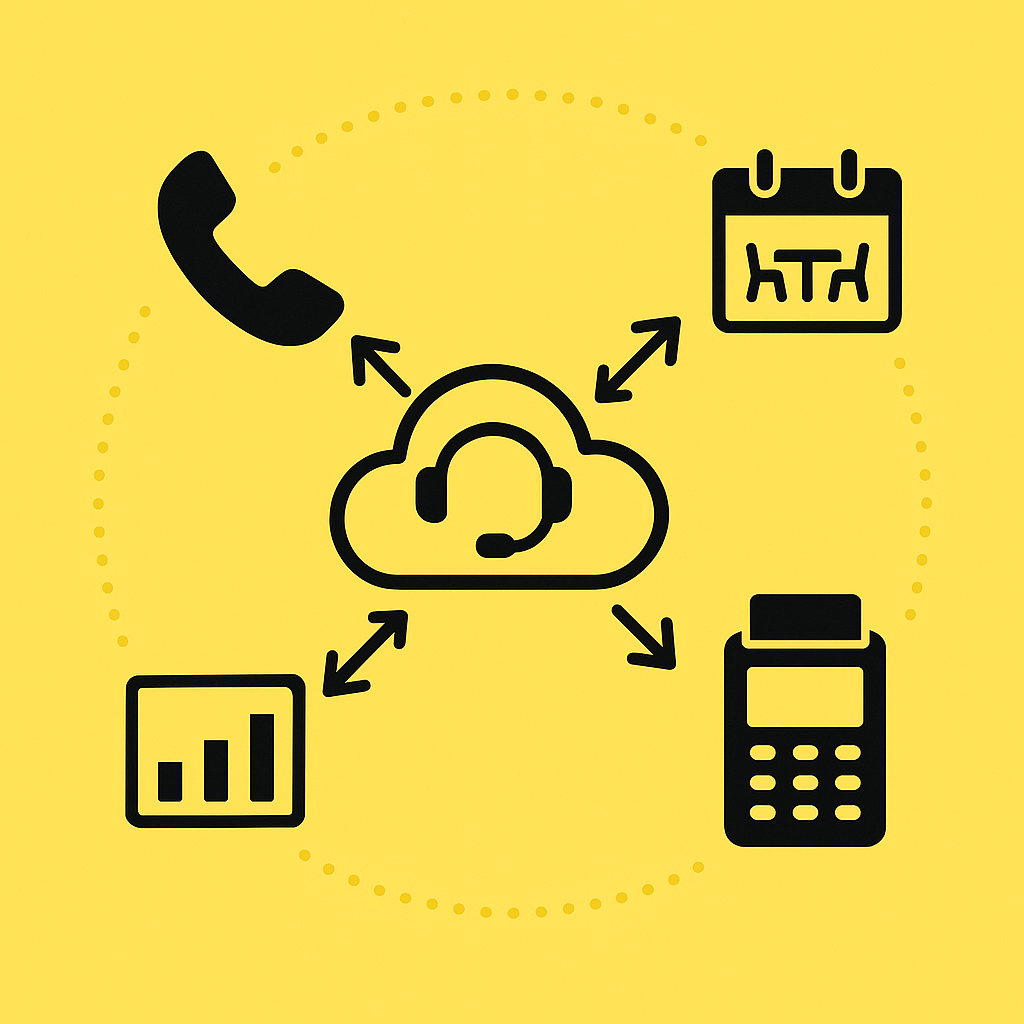
Deploying capacity quickly matters when Saturday is around the corner. An AI answering service uses artificial intelligence to handle incoming restaurant calls, respond to inquiries, manage reservations, and answer frequently asked questions. Integration with existing systems brings everything together.
Here's a high-level checklist for a 48-hour deployment:
The integration architecture follows a hub-and-spoke model with Hostie AI serving as the central communication hub. Within two days, your phone system can handle the Saturday rush without adding a single staff member to the host stand.
The numbers tell a compelling story. AI assistants achieved a 23.7% upsell success rate compared to 18.9% for human hosts during peak hours. That difference adds up across hundreds of calls per week.
Companies implementing AI calling systems have seen average cost reductions of 30-50% in their telecommunications operations while simultaneously increasing contact rates by 300-400%. For restaurants, that translates to fewer missed reservations, lower labor costs, and more covers per service.
Guest experience improves alongside financials. A study showed that just a one-star increase in Yelp reviews led to an additional 5-9% in revenue. When callers reach a helpful voice instantly instead of waiting on hold, satisfaction climbs and reviews follow.
Handling 200 calls on a Saturday night isn't a distant dream; it's a practical reality with the right AI phone answering system. Cloud-based platforms pool multiple agents to clear any call surge, while low-latency responses keep guests engaged from the first ring.
Flour + Water and The Slanted Door Group have already proven the model works. Amanda Flores summed up the operational shift:
"We've definitely curated how to work an AI system for a really busy restaurant. And our managers can look through the resolved list and look for trends or keywords." — Hostie AI
If your team is still scrambling to answer phones during the dinner rush, it's time to explore what an AI virtual host can do. With Hostie AI, you can integrate with OpenTable and Toast in 48 hours, resolve over a thousand calls per month, and keep your staff focused on the guests right in front of them.
💡 Ready to see Hostie in action?
AI phone systems use cloud-based platforms that allow multiple AI agents to manage calls concurrently. By pooling agents, these systems can handle high call volumes without busy signals, ensuring efficient call management during peak times.
AI phone systems reduce missed calls by 87% and decrease hold times by 91%, leading to increased revenue and improved guest satisfaction. They allow staff to focus on in-person guests while the AI handles phone inquiries and reservations.
Hostie AI offers restaurant-specific integrations and can handle over 200 calls with pooled agents. It provides a 22-second average call-to-booking time, making it a strong choice for restaurants compared to general business platforms like Aircall and Yelp Host.
Restaurants using AI phone systems see a 23.7% upsell success rate and cost reductions of 30-50% in telecommunications. This leads to fewer missed reservations, lower labor costs, and increased revenue from improved guest experiences.
Hostie AI can be integrated with systems like OpenTable and Toast within 48 hours. This quick deployment allows restaurants to handle high call volumes efficiently without adding extra staff.
RELATED